|
Latest Update Visa-Free Travel to China Coming Soon for Canadians! Canadian travellers are on the cusp of a new era in Asia, with visa-free access to China set to become a reality following Prime Minister Mark Carney’s high-profile visit to Beijing in mid-January, 2026. For tourists from Canada, this promises simpler trips, cheaper planning, and far more spontaneity than the paperwork-heavy journeys of the past decade. Read more… |
Yes, we offer visa-free China tours from Canada & USA. We do it by taking advantage of China’s visa-free transit for 10 days or 240 hours applicable to Canadians, Americans and citizens from some other countries. The National Immigration Administration of China announced this new policy on December 17, 2024 to boost tourist arrivals.

If you planning to visit China, we have some China tours that would allow you to explore the country without having to go through the hassle of applying for a China visa.
The 14-day Essential China (Visa-free Version) is a perfect example.
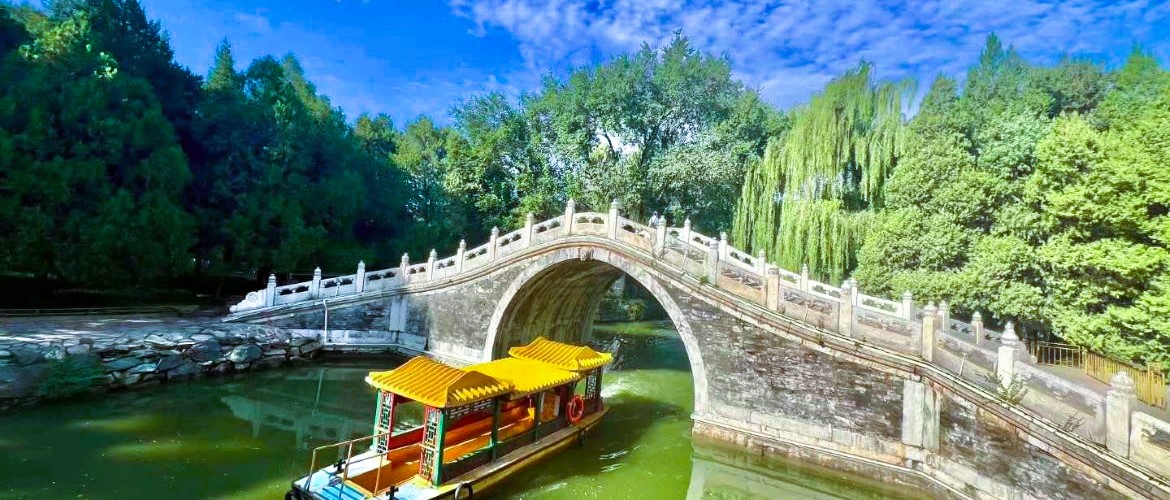
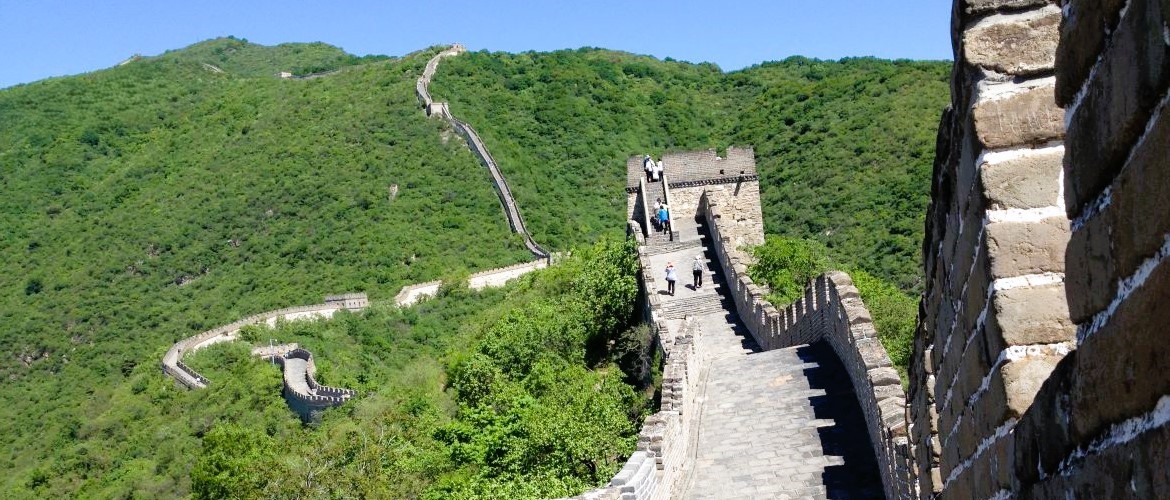
The luxury, fully guided small-group tour starts in Beijing and ends in Shanghai. In between, you’ll visit Xi’an, Guilin and Hong Kong. Trip highlights include the Great Wall at Mutianyu, the Forbidden City, the Temple of Heaven, the Summer Palace, the Terracotta Army, and a day cruise on the picturesque Li River in Guilin.
Related links
Visa Free China Tours – Recommended Itinerary
14-day Essential China (Visa-free Version)
Meal Code: B = breakfast / L = lunch / D = dinner
Day 1/Thu: Departing for Beijing
The trip starts with your transpacific flight departing from a city of your choice. You’ll lose a day upon crossing the International Date Line.
Day 2/Fri: Arrival in Beijing
Meet the driver on arrival for transfer to the hotel. You’ll have the remainder of the day at leisure. The guide will get in touch with you tonight.
Day 3/Sat: Beijing (B/L/D)
The capital of China, Beijing is a world-class cultural and educational centre with a population of 21.9 million (2020), ranking it China’s second largest city behind Shanghai. Beijing is renowned for its opulent palaces, temples, and huge stone walls and gates – treasures that make it the most popular tourist city in China by the number of visitors it receives every year.
We begin today with a visit to the Forbidden City. Officially known as the Palace Museum, the Forbidden City was where the emperors of the Ming (1368-1644) and Qing (1644-1912) dynasties lived and carried out their administration. Construction of the Forbidden City took 14 years (1406-1420) to complete. The complex consists of 980 buildings and covers 72 hectares or 180 acres. It exemplifies traditional Chinese palatial architecture and has influenced cultural and architectural developments in East Asia and elsewhere. Though the Qing Dynasty was overthrown in 1912, the royal family was allowed to continue to live in the Forbidden City till 1924, when the last emperor, Pu Yi, was driven out of the imperial palace. One year later, the Forbidden City was turned into a museum. Declared a World Heritage Site by UNESCO in 1987, this is the largest collection of preserved ancient wooden structures in the world.